
Coagulation
PT (INR) and aPTT
The two tests that measure how long your blood takes to clot, and that steer anticoagulant treatment.
Updated on November 18, 2025
What is this test for?
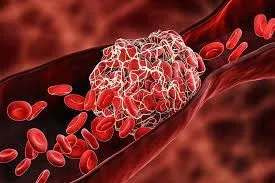
The PT explores the extrinsic clotting pathway; it is reported as the INR, the figure that steers vitamin K antagonists. The aPTT explores the intrinsic pathway and the effect of heparin.
Together they answer two different questions: does your blood clot normally, and is an anticoagulant at the right dose?
- Monitoring treatment with warfarin, acenocoumarol or fluindione.
- Before surgery or a dental extraction.
- Abnormal bleeding, spontaneous bruising, very heavy periods.
- Liver panel: the liver makes the clotting factors.
How to prepare
No preparation. Never stop your anticoagulant for the draw: the test exists precisely to measure its effect.
Give the time of your last dose and the brand you take: switching product can shift the INR for days.
Reading your results
An INR that is too low exposes you to a clot, one that is too high to bleeding. Between the two lies the therapeutic range set by your doctor — it is not the same for everyone.
| Test | Usual value |
|---|---|
| PT (no treatment) | 70 – 100 % |
| INR (no treatment) | 0.8 – 1.2 |
| INR on vitamin K antagonist | 2.0 – 3.0 (most often) |
| INR after a mechanical valve | 2.5 – 3.5 |
| aPTT | 22 – 33 seconds |
| aPTT on heparin | 1.5 – 2.5 times the control |
Related tests
 Coagulation
: INR, aPTT and D-dimers
The system that stops you bleeding and the one that stops you clotting, measured in a single draw.
5 min
Learn more
CoagulationD-dimers
A test whose strength lies in exclusion: a normal level very nearly rules out a thrombosis.
5 min
Learn more
 Haematology
Full blood count (FBC)
Red cells, white cells and platelets in a single sample: the first reflection of your general health.
5 min
Learn more