
Coagulation
Coagulation: INR, aPTT and D-dimers
The system that stops you bleeding and the one that stops you clotting, measured in a single draw.
Updated on April 29, 2025
What is this test for?
The INR standardises the prothrombin time. It is essential on vitamin-K antagonists (warfarin, acenocoumarol): it says whether the blood is thin enough to prevent a clot, and not so thin that you bleed.
The aPTT explores the intrinsic pathway, useful on heparin and in the work-up of unexplained bleeding.
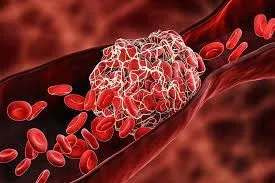
D-dimers are fibrin fragments released when a clot dissolves. Their main value is their negative predictive value: a normal level, with low clinical probability, almost certainly rules out deep-vein thrombosis or pulmonary embolism — and spares you imaging.
A raised D-dimer is not diagnostic: it rises after surgery, during pregnancy, in infection, cancer, inflammation, and simply with age.
When does your doctor prescribe it?
Suspected venous thrombosis or pulmonary embolism, work-up before a puncture or surgery, monitoring anticoagulant treatment, investigation of abnormal bleeding, after ischaemic stroke, investigation of disseminated intravascular coagulation.
How to prepare
No fasting. You must report any anticoagulant or antiplatelet drug: VKA, heparin, rivaroxaban, apixaban, dabigatran, clopidogrel, aspirin. The laboratory needs the time of your last dose, because it conditions the interpretation.
On VKA, never change the dose yourself on the basis of a result: the target is set by your doctor and depends on the indication.
Reading your results
| Parameter | Usual value | On treatment |
|---|---|---|
| INR | 0.8 – 1.2 | 2.0 – 3.0 (most often) |
| aPTT | 24 – 36 s | 1.5 – 2.5 × control on heparin |
| D-dimers | < 500 µg/L | Age-adjusted threshold after 50 |
| Platelets | 150 – 400 × 10³/µL | unchanged |
Related tests
 Haematology
Full blood count (FBC)
Red cells, white cells and platelets in a single sample: the first reflection of your general health.
5 min
Learn more
 Biochemistry
Blood creatinine and glomerular filtration rate (eGFR)
The kidney does not complain. Creatinine and eGFR let you watch it long before symptoms appear.
5 min
Learn more
 Biochemistry
Lipid profile and lipoprotein(a)
Total cholesterol, LDL, HDL and triglycerides — plus a genetic particle often forgotten: lipoprotein(a).
5 min
Learn more