
Microbiology
Blood cultures
The sample that grows the bacteria in your blood: the decisive test in severe fever.
Updated on November 25, 2025
What is this test for?
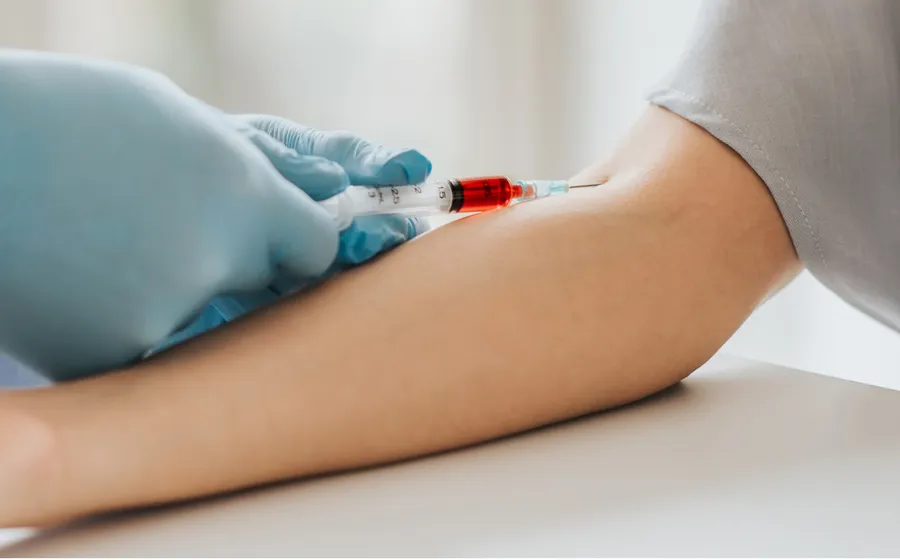
Two bottles are filled with blood drawn from the skin and then incubated. If bacteria are present in the blood, they multiply and are identified, along with their sensitivity to antibiotics.
The result changes the treatment: it allows a broad antibiotic, given “blind”, to be replaced by the precise molecule that targets the bacterium involved.
- High fever with severe rigors, fever coming in attacks.
- Suspected infection in someone immunosuppressed, on chemotherapy, in intensive care.
- Joint prosthesis, heart valve, long-term catheter.
- Septic shock: sample taken before the first antibiotic dose.
How to prepare
The draw is best taken before the first antibiotic, and in pairs: two different sites, 30 minutes apart. The volume of blood is decisive — 8 to 10 mL per bottle in an adult.
Skin disinfection is timed and must not be touched afterwards. That is what prevents false positives from skin contamination.
Reading your results
One positive bottle in four for a skin organism suggests contamination, not infection. Two positive pairs for the same organism, on the other hand, are conclusive.
| Step | Time |
|---|---|
| Draw | 0 – 1 h |
| Growth detection | 10 – 24 h on average |
| Organism identified | 24 – 48 h |
| Antibiogram | 48 – 72 h |
| Negative culture at 5 days | Nothing grew |
Related tests
 Biochemistry
C-reactive protein (CRP)
The most widely used marker for detecting inflammation and for following its course during treatment.
5 min
Learn more
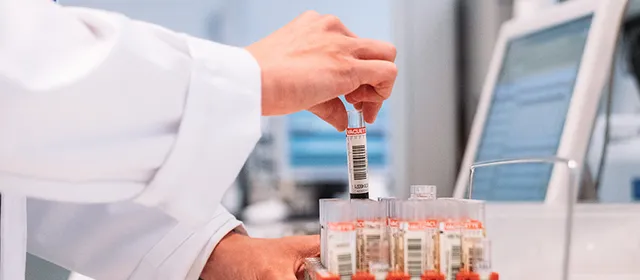 Haematology
Full blood count (FBC)
Red cells, white cells and platelets in a single sample: the first reflection of your general health.
5 min
Learn more
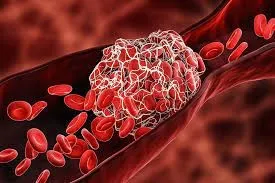 Coagulation
PT (INR) and aPTT
The two tests that measure how long your blood takes to clot, and that steer anticoagulant treatment.
5 min
Learn more