
Endocrinology
Testosterone
A hormone to be measured in the morning: the level moves with the hour, with sleep and with the season.
Updated on October 2, 2025
What is this test for?
Testosterone is made by the testes in men and, in smaller amounts, by the ovaries and adrenals in women. It maintains muscle mass, bone density, libido and energy.
In men the test documents genuine hypogonadism. In women a raised testosterone points towards polycystic ovary syndrome.
- Lasting fatigue, lowered libido, loss of muscle mass, erectile problems.
- Delayed puberty in the adolescent, gynaecomastia.
- In women: acne, excess hair growth, irregular cycles.
- Monitoring hormonal treatment, especially after long-term corticosteroids.
How to prepare
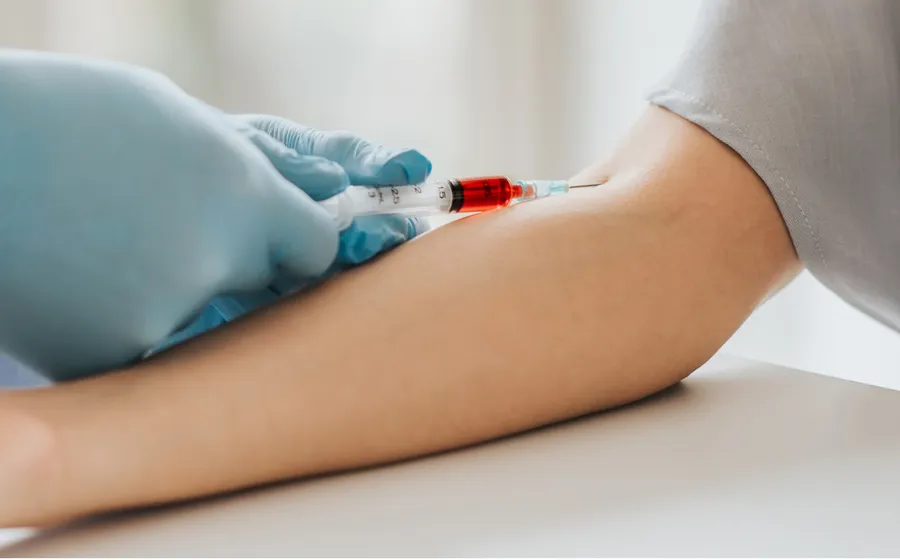
The draw must take place between 8 and 10 a.m., fasting, after a normal night’s sleep. The level collapses after a short night or night shift.
A single measurement is not enough: the guidelines ask for two morning measurements, taken apart in time, before concluding a deficiency.
Reading your results
The laboratory measures total testosterone; bioavailable testosterone is calculated from albumin and SHBG. The two are read together.
| Profile | Total testosterone |
|---|---|
| Man 20 – 50 | 3 – 10 µg/L (10 – 35 nmol/L) |
| Man over 50 | 2.5 – 8 µg/L |
| Woman | 0.2 – 0.6 µg/L |
| Suggested deficiency (man) | < 3 µg/L, confirmed by a second morning measurement |
Related tests
 Endocrinology
TSH and thyroid profile
The small compass of your metabolism: TSH reacts before symptoms become visible.
5 min
Learn more
 Biochemistry
C-reactive protein (CRP)
The most widely used marker for detecting inflammation and for following its course during treatment.
5 min
Learn more
 Endocrinology
Cortisol
The stress hormone, where the time of the draw matters as much as the number itself.
5 min
Learn more