
Biochemistry
Urine albumin-to-creatinine ratio
The test that detects early kidney damage, years before the blood creatinine moves.
Updated on October 30, 2025
What is this test for?
A healthy kidney passes less than 30 mg of albumin per gram of creatinine. When the filter begins to leak, albumin appears in the urine — and that shows up years before the blood creatinine rises.
The ratio on a single sample has replaced the 24-hour collection: simpler, more reliable, and available without an appointment in our centres.
- Type 1 or type 2 diabetes, even when well controlled.
- High blood pressure.
- Heart failure, obesity, smoking.
- Family history of kidney disease.
How to prepare
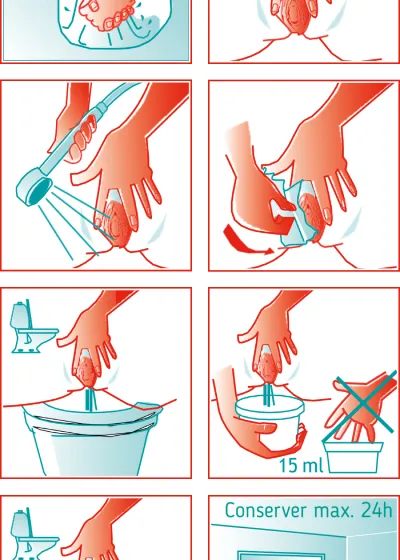
Use the first urine of the morning: more concentrated and less influenced by the day’s activity.
Postpone the sample if you have a fever, a urinary infection, or after intense effort: all three raise albumin temporarily and produce a false diagnosis.
Reading your results
An abnormal result must be confirmed by a second measurement a few weeks later, on a different sample. That is the rule in the international guidelines.
| A/C ratio | Classification |
|---|---|
| < 30 mg/g | Normal (A1) |
| 30 – 300 mg/g | Moderately increased (A2) — microalbuminuria |
| > 300 mg/g | Severely increased (A3) — proteinuria |
Related tests
 Biochemistry
Blood creatinine and glomerular filtration rate (eGFR)
The kidney does not complain. Creatinine and eGFR let you watch it long before symptoms appear.
5 min
Learn more
 Biochemistry
Electrolytes (sodium, potassium, chloride)
The minerals that drive hydration, heart rhythm and the body’s acid balance.
5 min
Learn more
 Biochemistry
Fasting blood glucose
The sugar level in your blood on waking: the first step towards a diabetes diagnosis, ahead of glycated haemoglobin.
5 min
Learn more